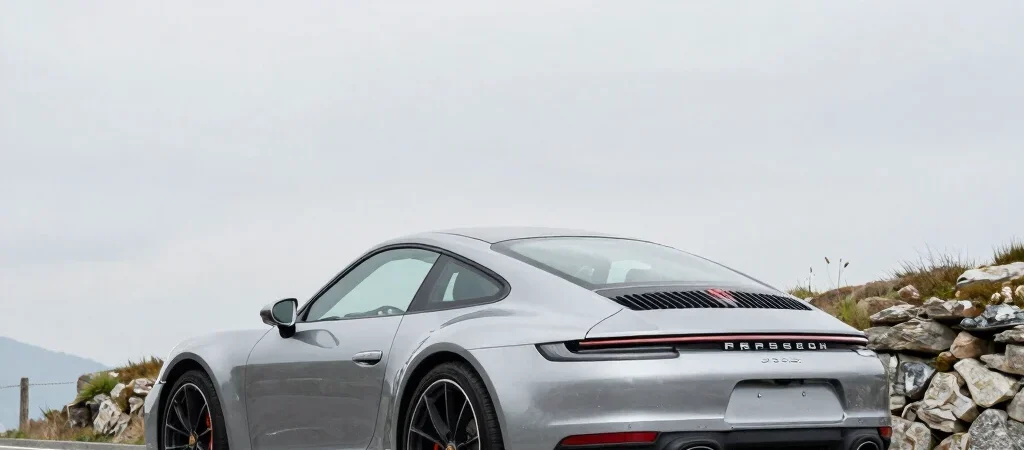
An engine behind the rear axle sounds like a packaging mistake until you consider what it does under acceleration. The Porsche 911 has built its identity around that unusual weight distribution, turning a demanding layout into a distinctive part of how the car puts power down and changes direction.
The advantage comes with a trade-off
With substantial weight over the driven rear wheels, a 911 can find useful traction when accelerating out of a corner. But that same mass sits behind the driver, so the car’s balance can feel different from a front-engine sports car, especially when a driver lifts off the throttle mid-corner. The layout rewards smooth inputs rather than pretending physics has disappeared.
Evolution, not a clean slate
Across generations, Porsche has developed the 911’s suspension, tires, electronics, and powertrains around its rear-engine foundation. The transition from air-cooled to water-cooled engines in the 996 generation changed an important part of the car without changing its basic layout. That continuity lets each new 911 feel like a fresh interpretation of the same engineering problem.
A layout with a point of view
A mid-engine arrangement can make balance easier to achieve, and many sports cars take that route. The 911 makes a different case: a recognizable design can remain compelling when its compromises are understood and carefully managed. Its rear-mounted engine is not just a historic detail; it is the reason the car still feels like itself.