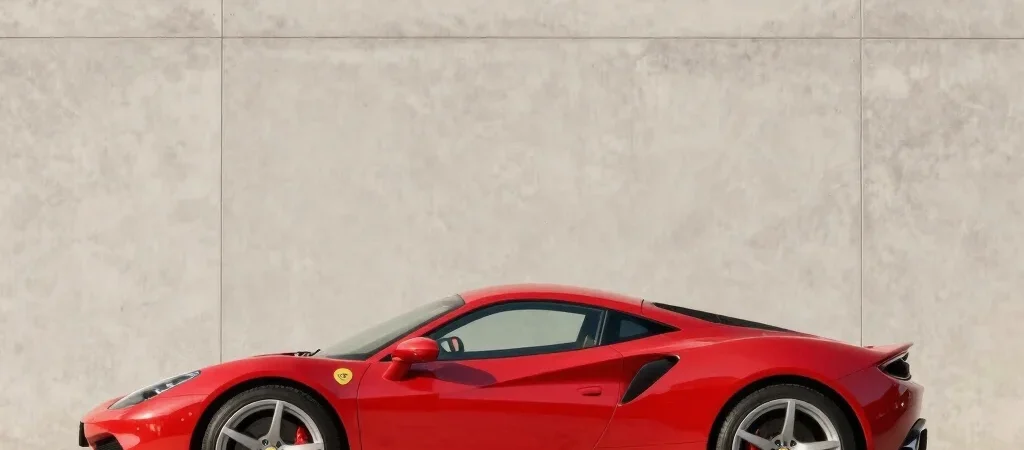
A mid-engine car makes its priorities visible before the engine starts. The cabin sits forward, the body wraps tightly around the mechanical hardware, and the driver is close to the car’s center. That arrangement can help create responsive handling, but it also asks designers to solve a different set of space and heat problems.
Balance begins with placement
Positioning the engine between the axles helps concentrate mass near the middle of the car. That can make the car feel quick to rotate and composed through a change of direction, though the result still depends on suspension tuning, tires, and the engine’s exact placement. The layout is a useful starting point, not a guarantee of good handling.
The cabin pays its share
A mid-engine sports car has less room for a conventional rear seat and must route cooling air to a powertrain tucked behind the cabin. Rear visibility can be limited by the engine cover and bodywork, while luggage space is often split between small compartments rather than one broad trunk. The Chevrolet Corvette’s move to a mid-engine layout with the C8 generation illustrates how thoroughly that choice can reshape a familiar sports-car formula.
Design follows the machinery
On cars such as the Ferrari 296 GTB, large side intakes are not decoration alone: they reflect the need to feed air to components housed behind the occupants. Long doors, low seating, and a compact cabin are part of the same packaging story. Once the engine moves, the exterior, cooling system, and everyday experience all have to move with it.